
In the field of construction and industrial applications, irregular steel grating plays a crucial role. As a supplier of irregular steel grating, I have witnessed firsthand the importance of adhering to domestic standards. These standards not only ensure the quality and safety of the products but also facilitate smooth trade and usage in the market.
Understanding Irregular Steel Grating
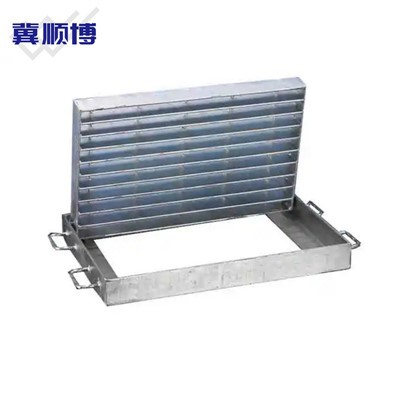
Irregular steel grating refers to steel grating products that do not conform to the standard or regular specifications. They are designed to meet specific requirements of different projects, such as non - standard sizes, special shapes, or unique load - bearing capacities. These gratings are widely used in various industries, including construction, manufacturing, and transportation.
Domestic Standards for Irregular Steel Grating
Material Quality
One of the primary domestic standards for irregular steel grating is related to the material quality. The steel used in the grating should meet certain chemical and mechanical properties. For example, the carbon content, sulfur, and phosphorus levels in the steel are strictly regulated. High - quality steel with appropriate alloying elements ensures the strength, corrosion resistance, and durability of the grating.
In China, the standard for carbon steel used in steel grating usually requires a carbon content within a certain range. For example, common carbon steels for grating may have a carbon content between 0.1% - 0.3%. This range provides a good balance between strength and ductility. Additionally, the steel should have a certain level of yield strength and tensile strength. For instance, the yield strength of the steel used in grating may be required to be at least 235 MPa, and the tensile strength should be in the range of 370 - 500 MPa.
Dimensional Accuracy
Dimensional accuracy is another critical aspect of the domestic standards for irregular steel grating. The length, width, thickness, and aperture size of the grating should be within the specified tolerance range. For irregular gratings, the custom - made dimensions need to be accurately fabricated according to the design requirements.
The tolerance for the length and width of the grating is usually within ± 5mm for general applications. However, for more precise projects, the tolerance may be reduced to ± 2mm. The thickness of the bearing bars and cross - bars also has strict tolerance requirements. For example, if the design thickness of a bearing bar is 5mm, the actual thickness should be within the range of 4.8 - 5.2mm.
Welding Quality
Welding is an important process in the manufacturing of steel grating. The domestic standards require that the welding joints should be strong and reliable. The welds should be free from defects such as cracks, porosity, and incomplete fusion.
The welding process should follow certain procedures and parameters. For example, the welding current, voltage, and welding speed need to be carefully controlled. The weld bead should have a smooth surface and proper penetration. In addition, non - destructive testing methods, such as ultrasonic testing or magnetic particle testing, may be used to ensure the quality of the welds.


Surface Treatment
Surface treatment is essential for protecting the steel grating from corrosion. Domestic standards specify different surface treatment methods and their quality requirements. Common surface treatment methods for steel grating include hot - dip galvanizing, powder coating, and painting.
Hot - dip galvanizing is a widely used surface treatment method. The zinc coating thickness should meet the relevant standards. For example, in some cases, the zinc coating thickness on the surface of the grating should be at least 85μm for outdoor applications. Powder coating and painting also have specific requirements for the coating thickness, adhesion, and color uniformity.
Different Types of Irregular Steel Grating and Their Standards
Compound Grating
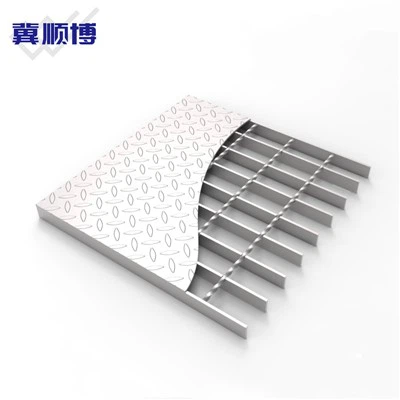
Compound Grating is a type of irregular steel grating that combines different materials or structures. It usually consists of a steel grating base with a non - slip surface layer, such as a rubber or plastic coating. The domestic standards for compound grating focus on the bonding strength between the steel grating and the non - slip layer, as well as the performance of the non - slip layer.
The bonding strength should be sufficient to ensure that the non - slip layer does not peel off under normal use conditions. The non - slip layer should have good anti - slip properties, which are usually measured by the coefficient of friction. The coefficient of friction should be at least 0.5 to ensure the safety of people walking on the grating.
Platform Grating
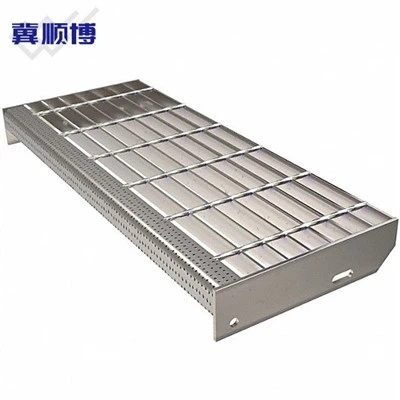
Platform Grating is often used in industrial platforms, walkways, and staircases. The domestic standards for platform grating emphasize the load - bearing capacity and anti - slip performance.
The load - bearing capacity of platform grating is determined by the size and spacing of the bearing bars and cross - bars. The design load should be calculated based on the actual usage scenario, such as the number of people or the weight of equipment on the platform. The anti - slip performance is also crucial to prevent accidents. The surface of the platform grating may be treated with a special pattern or coating to increase the friction.
Swage Locked Grating
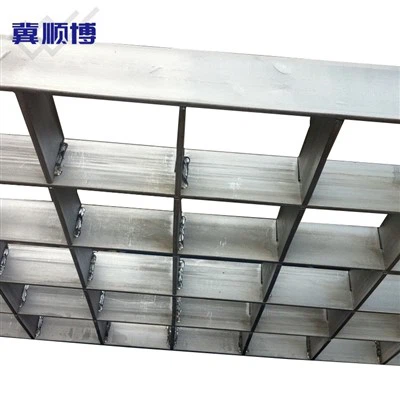
Swage Locked Grating is a type of steel grating with a unique locking mechanism. The domestic standards for swage locked grating focus on the locking strength and the overall stability of the grating.
The swage locking process should ensure that the bearing bars and cross - bars are firmly connected. The locking strength should be able to withstand the expected loads without loosening. In addition, the overall stability of the grating is important to prevent deformation or collapse under load.
Importance of Adhering to Domestic Standards
Adhering to domestic standards for irregular steel grating is of great significance. Firstly, it ensures the safety of the products. By meeting the standards for material quality, dimensional accuracy, welding quality, and surface treatment, the grating can withstand the expected loads and environmental conditions, reducing the risk of accidents.
Secondly, it promotes the standardization of the market. When all suppliers follow the same standards, it is easier for customers to compare different products and make informed purchasing decisions. This also helps to maintain a fair and competitive market environment.
Finally, it facilitates international trade. Many countries have their own standards for steel grating. By adhering to domestic standards, it is easier for suppliers to meet the requirements of international customers and expand their market share.
Conclusion
As a supplier of irregular steel grating, I understand the importance of domestic standards. These standards provide a clear guideline for the manufacturing, quality control, and usage of irregular steel grating. By strictly adhering to these standards, we can ensure the quality and safety of our products, and meet the diverse needs of our customers.
If you are in need of high - quality irregular steel grating that meets domestic standards, please feel free to contact us for procurement and negotiation. We are committed to providing you with the best products and services.
References
- National Standards of [Your Country] for Steel Grating
- Industry Guidelines for Irregular Steel Grating Manufacturing