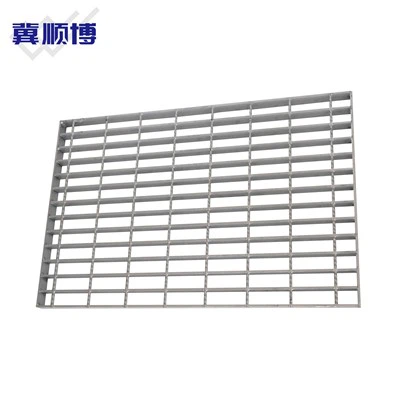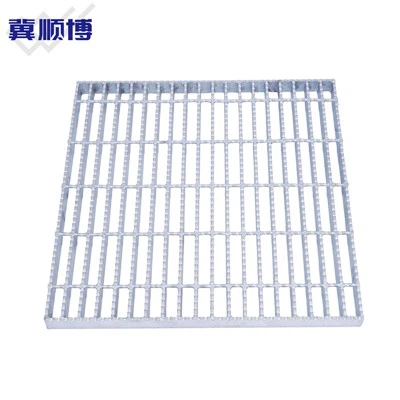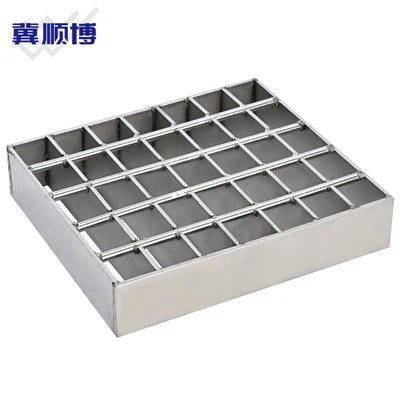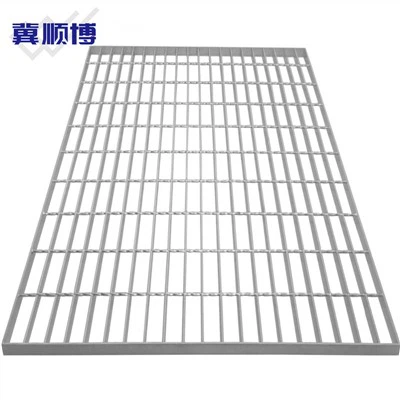
Product Overview
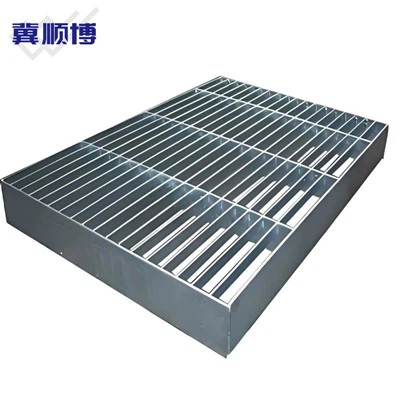
Stainless steel grating provides high-load-bearing, corrosion-resistant flooring and trench covers for heavy industrial and architectural environments exposed to moisture, aggressive chemicals, or extreme thermal variations. Relying on an inherent chromium-oxide passive film rather than applied coatings, these panels deliver predictable structural rigidity and long-term durability for walkways, mezzanine platforms, and drainage networks in chemical plants, marine rigs, and sanitary processing facilities.
-
![Heavy Duty Stainless Steel Grating]() Heavy Duty Stainless Steel GratingHeavy-duty stainless steel gratings are mainly made of 304 or 316 stainless steel. 304 stainless steel has good corrosion resistance and oxidation resistance, and is suitable for general corrosive
-
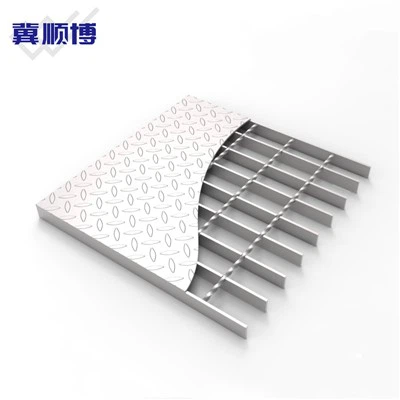
![Compound Grating]() Compound GratingCompound grating is composed of load-bearing steel grating base plate and anti-slip patterned steel plate bonded together. It can combine with various standard steel grating models and different
-
![Light Duty Grating]() Light Duty GratingWe provide high-quality light duty grating with the advantages of light weight, high strength, good corrosion resistance and easy installation.
-
![Stainless Steel Open Grid Flooring]() Stainless Steel Open Grid FlooringWe are a professional manufacturer of stainless steel open grid flooring and standard steel grating, owning 15 years of self-built factory operation experience.
-
![Plug Grating]() Plug GratingOur product lineup covers stainless steel grating, Plug Grating, serrated grating, press-locked grating, stair treads and nearly 100 specifications.
-
![Dense Steel Grating]() Dense Steel GratingOur product lineup covers nearly 100 specifications across multiple steel grating series, and dense steel grating is one of our mainstream offerings. Dense steel grating is a kind of pressure-welded
-
![Irregular Steel Grating]() Irregular Steel GratingOur irregular steel grating can be made into various special shapes and sizes, perfectly fitting non-standard layouts, complex frames and special engineering scenarios.
-
![Serrated Steel Grating]() Serrated Steel GratingWe make serrated steel grating welded with serrated flat bars. We use stainless steel for excellent corrosion and rust resistance, and it can be connected with hinges as trench covers for anti-theft,
-
![Stainless Steel Gully Grating]() Stainless Steel Gully GratingStainless steel gratings are functional components specifically designed for drainage systems. Made of stainless steel, they are primarily used to cover drains, sump pits, or sewer inlets. They
-
![Swage Locked Grating]() Swage Locked GratingSwage Locked Grating is a high-strength stainless steel flooring solution featuring a 400MPa anti-pressure capability.. With hot-dip galvanized surface treatment for a 15-20 year lifespan, it is
-
![Press Welded Steel Grating]() Press Welded Steel GratingPress welded steel grating is an open profile steel component formed by orthogonally combining bearing flat bars and cross bars via pressure welding, compliant with YB/T 4001.1 2007. . It offers high
-
![Platform Grating]() Platform GratingPlatform grating is a widely used steel grating product with strong surface and lateral impact resistance.. It is suitable for industrial platforms, featuring easy installation and attractive


Material selection dictates the corrosion resistance, fabrication requirements, and structural longevity of stainless steel grating in specific service environments.
AISI 304 / 304L Stainless Steel
Standard austenitic stainless steel containing 18 percent chromium and 8 percent nickel. Utilized for general industrial atmospheres, atmospheric corrosion resistance, and mild chemical exposure. Low-carbon (304L) variants prevent carbide precipitation during high-heat fabrication and welding processes.
AISI 316 / 316L Stainless Steel
Molybdenum-alloyed austenitic stainless steel (16 percent Cr, 10 percent Ni, 2 percent Mo). Essential for marine environments, coastal installations, chemical processing units, and exposure to chlorides, acids, and saline washdown solutions. Suitability must be verified against the actual operating medium, concentration, and operating temperatures.
Material Traceability
The required stainless steel alloy grade must be specified in the purchase order. Mill Test Reports (MTRs) and material traceability documents should be requested and confirmed prior to order finalization.
Structural Configurations and Surface Options
Grating Construction Methods
Welded Grating: Bearing bars and cross bars are fused at every intersection by automated resistance welding under high pressure and electrical current, creating a permanent, rigid panel optimal for rolling wheel loads.
Press-Locked Grating: Slotted bearing bars and cross bars are mechanically assembled under heavy hydraulic pressure, providing a clean, flush aesthetic suited for architectural sunshades and ceilings.
Swage-Locked Grating: Cold-formed hollow cross bars are swaged into pre-punched bearing bars, offering high torsion resistance and an advantageous strength-to-weight ratio.
Surface Profiles
Plain Surface: Smooth bearing bar edge standard for general maintenance platforms and areas requiring effortless manual cleaning and debris runoff.
Serrated Surface: Notched top edge on bearing bars to increase slip-resistance coefficients in outdoor platforms, oil refineries, and wet processing floors prone to oil, grease, or ice accumulation.
Surface Treatments
Pickling and Passivation: Chemical immersion removes weld scale and surface iron contamination from fabrication zones, fully restoring the protective chromium-oxide passive layer.
Electropolishing: Optional electrochemical treatment removes microscopic surface peaks, achieving ultra-low surface roughness (Ra <= 0.4 um) to prevent bacterial accumulation in pharmaceutical and food-grade installations.
Technical Specifications and Load Requirements
Stainless steel grating must be selected according to its dimensions, support arrangement, and intended loading conditions. Material grade alone does not dictate the structural load capacity of a finished panel.
Key Selection Parameters
|
Parameter |
Technical Specification / Information to Confirm |
|
Material Grade |
AISI 304, 304L, 316, or 316L (subject to mill certification) |
|
Grating Construction |
Welded, press-locked, or swage-locked |
|
Bearing Bar Dimensions |
Height (25 mm to 100 mm) x Thickness (3 mm to 6 mm) |
|
Bearing Bar Spacing |
Center-to-center pitch (e.g., 30 mm, 40 mm, 50 mm) |
|
Cross Bar Spacing |
Center-to-center pitch (e.g., 50 mm or 100 mm) |
|
Panel Dimensions |
Length, width, and required layout coverage (m2) |
|
Clear Span |
Exact distance between structural supporting members |
|
Loading Conditions |
Uniformly distributed load (kN/m2) and/or concentrated load (kN) |
|
Deflection Limit |
Project-specified allowable structural deflection (typically L/200 max) |
|
Surface Profile |
Plain or serrated bearing bar top edge |
|
Surface Finish |
Mill, acid-pickled/passivated, or electropolished |
|
Installation Hardware |
Compatible saddle clips, G-clips, and anchor fasteners |
Engineering Verification
Load capacity depends directly on bearing bar dimensions, bar spacing, clear span, and support conditions. For structural projects, buyers must provide required load parameters and clear span measurements. Engineering load-deflection verification tables complying with industry standards (such as NAAMM MBG 531 or BS 4592) are supplied upon request for verified configurations.
Production involves bar preparation, precise assembly, welding or mechanical locking, panel cutting, edge banding, and surface treatment.
Quality assurance protocols include:
Material Verification: Checking incoming raw material certificates and XRF Positive Material Identification (PMI) data against specified alloy grades.
Dimensional Inspection: Verifying bearing bar height, thickness, bar spacing, panel squareness, and cutout locations against approved shop drawings.
Joint Inspection: Visual and mechanical evaluation of weld fusion points or locking joints.
Surface Inspection: Assessing finish uniformity, freedom from weld spatter, and passivation quality.
Documentation Review: Compiling Mill Test Reports (MTRs) and inspection records for project handover.

Customization and Project Fabrication
Grating panels can be custom-fabricated to match complex plant layouts, minimizing costly field modifications:
CAD / BIM Prefabrication
Panels cut, banded, and notched around structural columns, pipes, and equipment bases based on approved shop drawings.
Toe Plates (Kick Plates)
Welded perimeter edge plates fitted along elevated platform openings to prevent tools or debris from falling through.
Compatible Fasteners
Matching stainless steel saddle clips and anchor assemblies supplied to prevent galvanic corrosion between dissimilar metals.

Request a Quote
To receive an accurate technical and commercial proposal, please include the following parameters in your inquiry:
Stainless Steel Alloy Grade: AISI 304, 304L, 316, or 316L
Bearing Bar Dimensions: Height x Thickness & Pitch Spacing
Surface Configuration: Plain or Serrated & Finish Type
Total Coverage Area: M2 or Panel Layout Shop Drawings
Load Requirements: Uniform/Concentrated load & clear span
Delivery Information: Destination Port and Preferred Delivery Incoterms
As one of the most professional stainless steel grating manufacturers and suppliers in China, we're featured by quality products and good price. Please rest assured to buy high-grade stainless steel grating for sale here from our factory. Contact us for more details.
open grate stair treads, metal bar grating stair treads, bar grating platformPopular Products