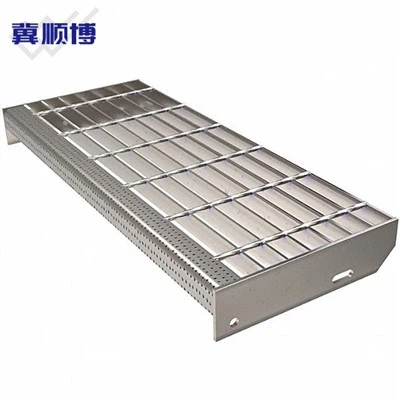

As a supplier of park walkway grating, I often get asked the question: Can park walkway grating be recycled? This is a crucial topic in today's environmentally - conscious world, and it's essential to understand the recycling potential of the products we offer.
Types of Park Walkway Grating
First, let's take a look at the different types of park walkway grating that we supply. One of the most common types is Open Steel Grating. Open steel grating is known for its high strength and open design, which allows for excellent drainage and ventilation. It is widely used in park walkways due to its durability and ability to withstand heavy foot traffic.
Another type is Plugged Steel Grating. Plugged steel grating has a closed surface, which provides a more solid walking surface. This type of grating is often used in areas where safety is a major concern, such as near water features or on slopes.


We also offer PV Walkway Grating. PV walkway grating is specifically designed for use in photovoltaic power generation areas within parks. It combines the functions of a walkway and support for solar panels, making it a unique and useful product.
Recycling Potential of Park Walkway Grating
Now, let's address the question of whether park walkway grating can be recycled. The answer is a resounding yes, especially for steel - based gratings. Steel is one of the most recycled materials in the world. The recycling process for steel involves melting down the old steel products and then re - forming them into new ones.
For our open steel grating, once it reaches the end of its service life in the park walkway, it can be collected and sent to a recycling facility. At the recycling plant, the grating is first sorted to remove any non - steel components, such as paint or debris. Then, it is melted in a furnace at high temperatures. The molten steel can be used to produce new steel products, including more park walkway gratings.
Plugged steel grating can also be recycled in a similar way. The closed surface of the plugged steel grating does not affect the recycling process significantly. The steel can still be separated from other materials and melted down for reuse.
PV walkway grating, although it has additional components related to photovoltaic applications, the steel part of it can be recycled. The non - steel components, such as the photovoltaic cells, may require a different recycling process, but the steel structure can follow the standard steel recycling route.
Benefits of Recycling Park Walkway Grating
There are several benefits to recycling park walkway grating. Firstly, it is an environmentally friendly option. Recycling steel reduces the need for mining new iron ore, which is a resource - intensive process. Mining iron ore not only consumes a large amount of energy but also has a significant impact on the environment, including deforestation and soil erosion. By recycling steel gratings, we can conserve natural resources and reduce the carbon footprint associated with steel production.
Secondly, recycling is cost - effective. Producing new steel from recycled materials generally requires less energy than producing steel from raw materials. This means that the cost of manufacturing new park walkway gratings from recycled steel can be lower. For park management and construction projects, this can result in cost savings.
Thirdly, recycling promotes a circular economy. In a circular economy, products are designed, used, and then recycled to create new products. By recycling park walkway grating, we are closing the loop and ensuring that the materials are continuously reused, rather than being discarded as waste.
Challenges in Recycling Park Walkway Grating
While the recycling of park walkway grating is possible and beneficial, there are also some challenges. One of the main challenges is the collection and transportation of the used gratings. Park walkway gratings are often installed in large areas, and it can be difficult to collect them efficiently. Additionally, transporting the heavy gratings to the recycling facility can be costly.
Another challenge is the presence of contaminants on the gratings. For example, if the gratings have been painted or coated with other substances, these need to be removed before the recycling process. Removing contaminants can add to the complexity and cost of recycling.
Our Role as a Supplier
As a park walkway grating supplier, we play an important role in promoting the recycling of our products. We can educate our customers about the recycling potential of the gratings and provide information on how to properly dispose of them at the end of their service life.
We can also work with recycling facilities to ensure that the collection and recycling process is as efficient as possible. By collaborating with recycling partners, we can help reduce the cost and complexity of recycling park walkway gratings.
Conclusion
In conclusion, park walkway grating, especially steel - based ones, can be recycled. Recycling offers numerous environmental, economic, and social benefits. Although there are challenges in the recycling process, with the right approach and collaboration, we can overcome these challenges and make the most of the recycling potential of park walkway gratings.
If you are interested in purchasing high - quality park walkway grating or have any questions about our products and their recycling, please feel free to contact us for further discussion and procurement negotiation.
References
- "Recycling of Steel: An Overview" - Journal of Materials Recycling
- "The Circular Economy in the Construction Industry" - International Journal of Sustainable Construction