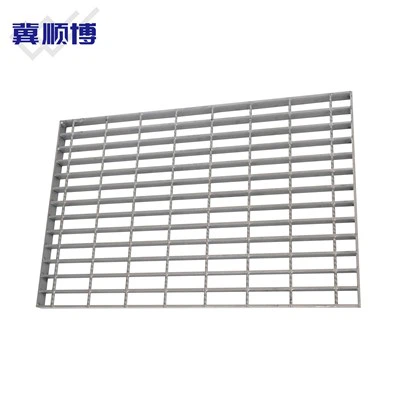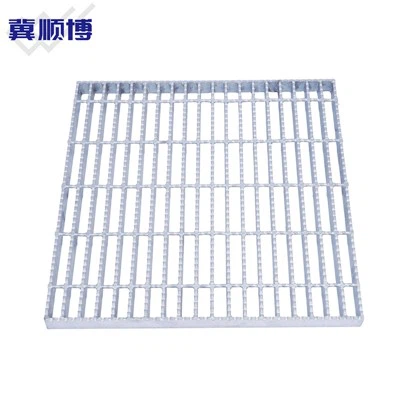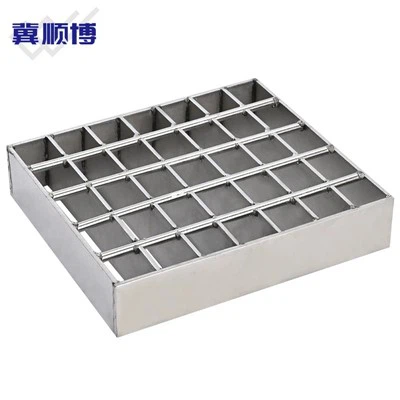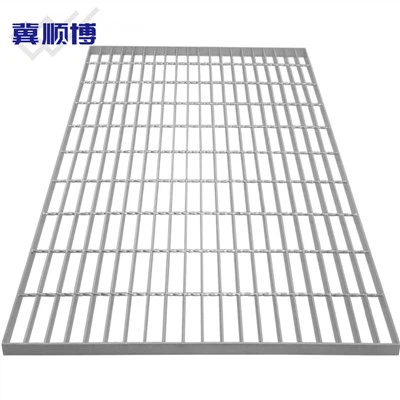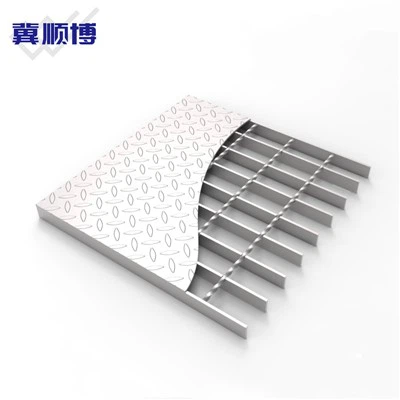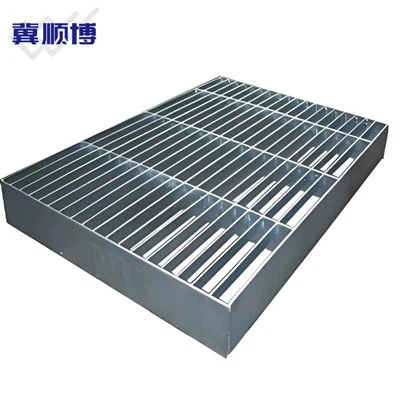
Carbon steel gratings can be made with twisted steel crossbars, indicated by the letter "W"; or with flat steel crossbars, indicated by the letter "L".
Carbon steel gratings with twisted steel crossbars are divided into three series:
★Series 1 (30mm spacing) grating is a commonly used type, applicable to various industrial sectors. This series features a 30mm center-to-center distance between the load-bearing flat steel bars, conforming to American standards. It offers strong resistance to surface impacts within the entire grating series. It is widely used in power plants, refineries, sewage treatment plants, grain silos, chemical plants, highways, airports, and docks for platforms, walkways, drainage ditch covers, and stair treads. Serrated gratings are suitable for wet and slippery environments, especially offshore oil platforms.
★ Series 2 (40mm spacing) steel grating is an economical and lightweight type, conforming to British standards for fixed platforms, walkways, and stairs. It is ideal for applications with small spans, even under loads such as those found in transport equipment walkways. It can also be used for warehouse shelving, mezzanine panels, trestle bridges, protective fences, and sunshades.
★ Series 3 (60mm spacing) steel grating is a variety specifically developed for applications in the mining industry. It solves the problem of mineral spillage on the grating surface. This series of steel grating has nominal openings of 50*60mm, allowing most spilled material to pass through, thus ensuring a clean and safe surface. This product is often specified for use in crushing systems, walkways on conveyor lines, ball mills, processing plants, and operating stations.
Carbon steel grating with flat steel crossbars is available in spacings of 30/30, 40/40, 50/50, 30/40, 30/50, 30/100, 40/100, and 50/100 mm, which can be combined. This type of carbon steel grating has a higher load-bearing capacity and is more expensive than those with twisted steel crossbars. It is widely used in civil and commercial buildings, theaters, subways, urban rail transit, factory lobbies, shopping mall ceilings, interior decoration, and other municipal engineering projects. It can also be used for platforms, walkways, ventilation windows (wells), billboards, and various covers.